Sunday, February 07 2010 @ 08:31 PM EST Contributed by: Kevin Horton Views: 11
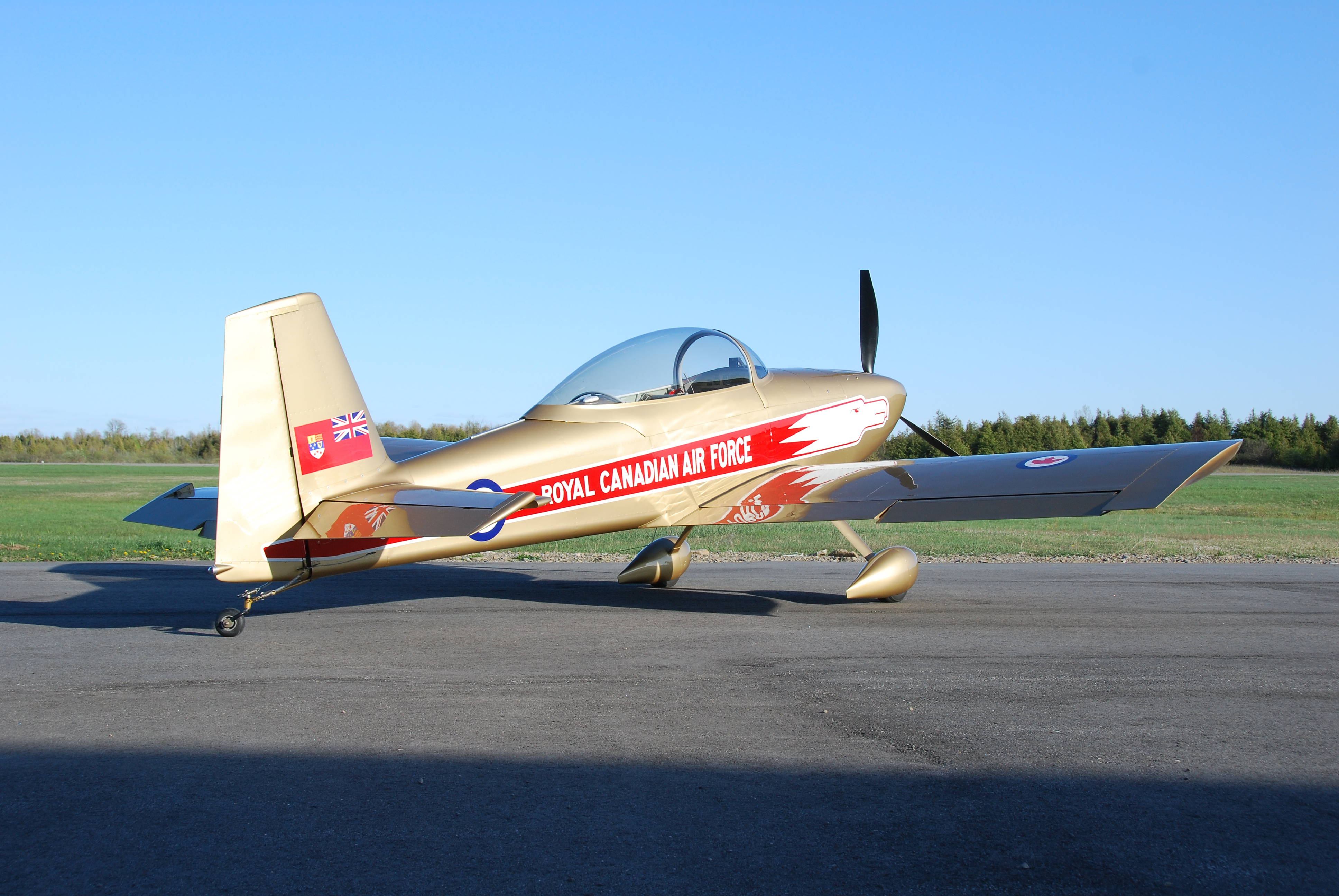
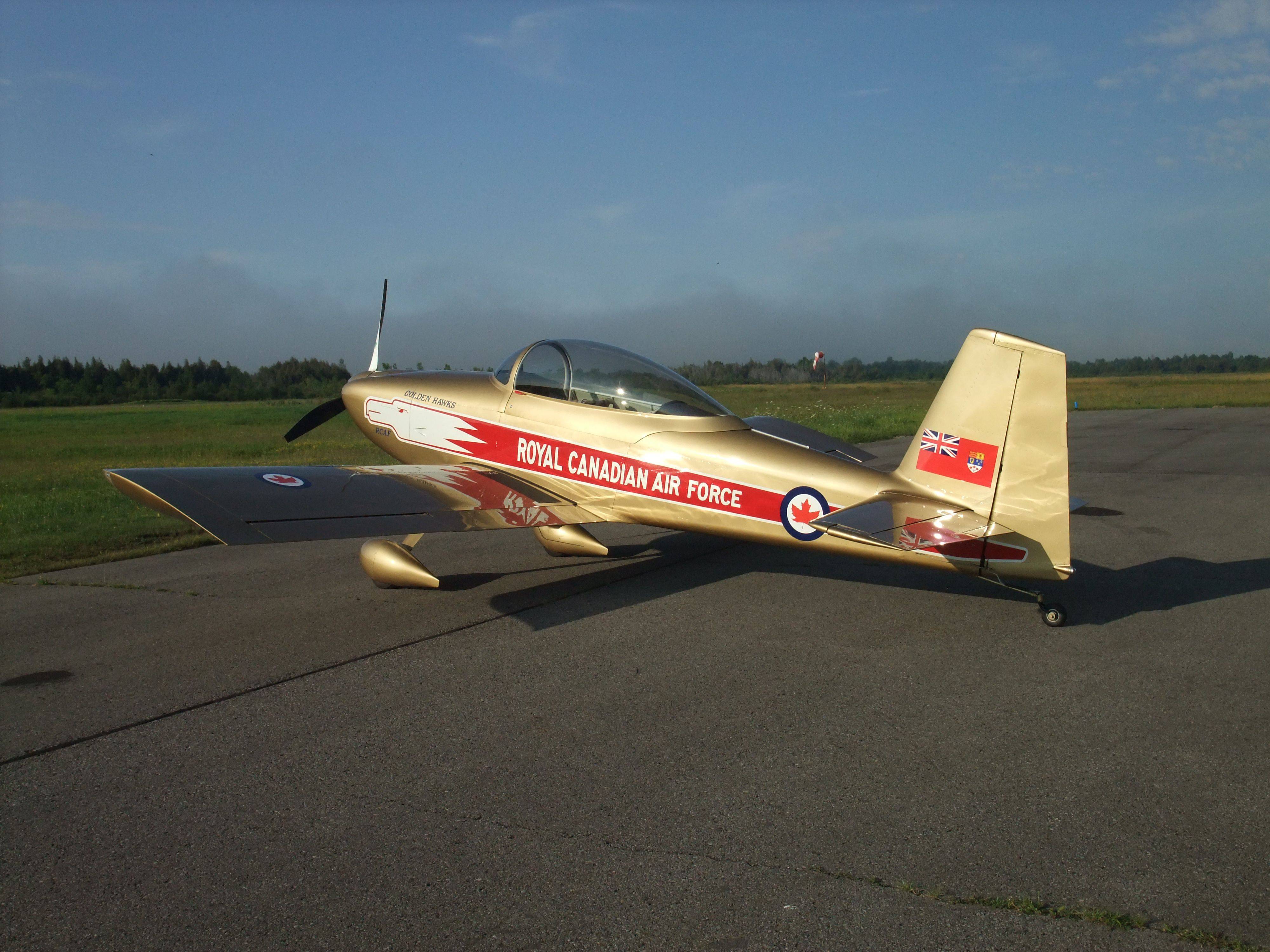
I got in a fair bit of flying for work this week, with trips to transport people for meetings in the Cessna C550 Citation II and the Beech King Air C90A. Saturday it was clear and cool here, so late morning I headed to the airport to fly the RV-8. I planned to do some more cruise performance testing with wheel pants OFF. The data I got on January 24th looks really, really clean, and I wanted to see how well data from another flight at another altitude would match up to the previous data.
I left the aircraft to preheat while I had lunch, then did a walk around, pulled it out of the hangar, and climbed in. I strapped in, and reached down to grab the headset, and it wasn’t there. I had taken it home as I wanted to try it in the King Air, and had forgotten to bring it back to Smiths Falls. I went back in the hangar, hoping that perhaps my old David Clark headset was in there somewhere, but no luck. Drat. Drat. Drat. I pulled the aircraft back in the hangar, and pondered my next move.
It would take an hour and a half to drive back home and return with the headset, and I really didn’t have that much time to spare, nor did I want to do that much driving. I called Terry to tell her that I wasn’t going flying after all, and she offered to bring the headset to me. What an angel! Thanks Terry.
After Terry arrived with the headset, I launched. I dropped the idea of doing more cruise performance testing, as that would take more time than I had to spare. I simply flew up to Ottawa and did two practice ILS approaches, then did a few circuits at Smiths Falls, taking advantage of the left crosswind to get some practice in crosswind landings.
The ILS approaches went well, but I definitely need to get some more cockpit storage pockets. If I am solo, I can put things in the passenger footwells, which are right beside my seat. But that won’t work when Terry is along.
Lessons Learned:
Make and use a “Going to the Airport Checklist”.
Leave all critical items such as headsets in the aircraft.
Sunday, January 31 2010 @ 07:50 PM EST Contributed by: Kevin Horton Views: 49
I didn't get flying this weekend. It was bright, sunny and cold on Saturday. I could have gotten flying mid-day, but I knew that the taxiway to the hangar would fill up with cars parked for Andrew Phillips' memorial service. There would be no way to get back to the hangar before the end of the afternoon, and Terry and I had another commitment which meant I needed to be on my way home by 1530. Oh well, there is always next week.
Sunday, January 31 2010 @ 07:43 PM EST Contributed by: Kevin Horton Views: 93
Andrew Phillips was killed when his RV-7A crashed on Saturday, 23 Jan. No idea yet on what caused the accident. He was flying back from Lindsay to Smiths Falls, in the company of two other aircraft. They were talking back and forth on the radio, and suddenly he was no longer answering, nor could he be seen. The other two aircraft searched along the ground track, but didn't see any signs of a crash. They then headed for Smiths Falls, hoping to find that he had experienced a radio failure, and that he had already landed. But, he wasn't there, so they went online to check his Spot track. The Spot hits stopped about where he was last seen, so they phoned the Trenton Joint Rescue Coordination Centre to report him missing, then they gassed up and went back to search some more. A Search and Rescue aircraft from Trenton found the wreckage at about 10:30 PM. Andrew's body was found in the remains of the aircraft. Read news stories and his obituary.
I had spoken with Andrew a few times, but certainly didn't know him very. He was a very nice guy, and was a tremendously enthusiastic member of the local RV community. My heart goes out to his wife and two young sons.
Andrew's memorial service was held at the Smith's Falls airport Saturday, in the Classic Wings hangar. The turnout was huge, with all the chairs filled, and a large crowd standing at the back.
I've lost a huge number of friends and acquaintances in aircraft accidents over the years. I was counting them for awhile, but stopped counting when I hit twelve back in the early 90s. Flying certainly has its risks - you can greatly minimize the risk by using best practices for everything, but you can never completely eliminate the risk. Everything we do in life has risk. You can die in a car accident (as we almost did last year), you can be killed walking along the street (as happened to a neighbour a few years ago), and you can expire in your sleep. In the end, you need to live your life. Be smart and careful about what you do, and how you do it, but don't stop living.
Sunday, January 24 2010 @ 07:18 PM EST Contributed by: Kevin Horton Views: 76
The low cloud finally pushed off to the east late this week, so I was able to get flying on Saturday afternoon. Once again the remote controller for the preheat failed to work. Fortunately it wasn’t too cold, so 1.5 hours of preheat while I had lunch, checked tire pressure, etc was enough. I did another test of the remote control, and it failed again. I brought the whole system home so I can so some proper troubleshooting.
I spent 45 minutes doing some cruise performance testing to get some data wit the wheel pants removed. Then I zipped up to Ottawa to do some practice instrument approaches. On the way home I heard mention on the radio about an ELT, so I tuned COM2 to 121.5 MHz, and heard the distinctive tone. I learned this afternoon that an aircraft based at our airport had crashed, and that the pilot was killed (his name hasn’t been released yet, so I won’t mention it). I knew him, but not that well. His family has my deepest condolences.
We bought another car this week - a 2005 Mazda 6 hatchback, with the four cylinder engine. Nice car. Terry is able to drive again, and needs a car to go to her physiotherapy sessions. And, I got the main computer working again. It took about an hour to open up the all-in-one iMac and replace the hard drive, and a few hours to restore everything from the backups.
Sunday, January 17 2010 @ 07:38 PM EST Contributed by: Kevin Horton Views: 89
No luck with the weather this week - way too much low cloud whenever I had time available - so no RV-8 flying :( I did manage to get one prof flight in Transport Canada’s C182 late Friday afternoon, but that wasn’t nearly as much fun as an RV flight would have been. Oh well. You can’t fight the weather.
I did crank out a software update for the preheat remote control. The new version, in theory, will write the ON/OFF state of the solid state relay (SSR) to the EEPROM whenever the state changes. The program will check this recorded state on startup, and will put the SSR ON and start the timer if it was ON when the system lost power. This change, if it works, will provide protection from any power interruptions. Next time I get to the hangar, I’ll load the new version and test this new function. If it doesn’t work I’ll load a simpler fall-back version that defaults to SSR ON at power up, with no fancy reading and writing to the EEPROM.
Some time ago, Dynon updated their EFIS software to allow GPS data to provide a backup to pitot data in the attitude computation algorithm. This was a welcome software change, as the previous attitude algorithm was heavily dependent on valid airspeed info to stabilize the attitude computation. If pitot pressure was ever lost, perhaps due to an iced up pitot tube, or a bird strike, the attitude display could become unstable. Not good for IFR ops. The latest EFIS software, which I loaded last week, will use GPS groundspeed to stabilize the attitude computation if the airspeed data becomes questionable.
Originally I thought I would have to do a major panel diving exercise to run a wire from the GPS 430 to the Dynon EFIS. But, when I dug into this, I discovered that the GPS data that is needed is exactly the same data as is currently sent to a jack in the cockpit for data recording. Similarly, the input to the EFIS that this data must be sent is the same wire that is connected to a cockpit jack to allow in-flight data recording and on-ground EFIS software updates. So, rather than crawling under the panel to run another wire, I’ll use a cable with a plug on each end to connect the GNS 430 cockpit data-out jack to the EFIS cockpit data-in jack. I made the required plug yesterday, and I’ll try it next time I go flying. The new GPS data in the EFIS will also allow it to update its internal clock, and to provide GPS track on the heading tape, and GPS data on the optional HSI display.
Terry got clearance to start weaning herself out of her cervical collar 10 days ago - that took a week, with a few more hours out of the collar each day. She still has occasional pain, but it is much, much better than it was before the surgery. Her neurosurgeon says that it should continue to gradually improve for several months, so it is too early to know what the end state is going to be.
I’ve spent way too much time the last three weeks fighting with computer hard drive melt downs. The hard drive on our main computer crashed between Christmas and New Years. Fortunately I had a current backup to restore from (thank God for Time Machine). I reformatted it and reinstalled everything. But, it failed again on Thursday, and this time it seems to have completely died. The computer doesn’t find it, and all it does is make a deathly repetitive squeaky click. I’ve ordered a new Samsung F2 1.5 TB drive which should arrive tomorrow. This drive is quieter and/or more reliable than anything I can find in stock in Ottawa. I’ll perform major surgery and open up the all-in-one iMac to replace the drive. I could take it to a computer shop and have them do the work, but the job doesn’t look as hard as replacing the hard drive in my 12” PowerBook, which I managed a few years ago. Wish me luck.
Sunday, January 10 2010 @ 07:00 PM EST Contributed by: Kevin Horton Views: 145
Monday afternoon it was quiet at work, and I needed to clear the recent snow from in front of the hangar, so I took some comp time. Much to my surprise and delight, I found that Ron, the hangar owner, had just finished clearing the snow when I arrived. He had the day off, and must have felt like getting out of the house.
I hooked up the remote preheat control, and did some tests. I put it right next to a window, and the cell phone has an excellent signal. The control worked perfectly, so I left it running and came home.
Sunday morning, it was clear and cold. I made the two phone calls to trigger the preheat timer at 6:45, and drove out to the hangar just before lunch time, hoping to find that the engine was nicely warmed up. Instead, I found it stone cold, with the preheater not running. Drat. I could find no obvious reason why it had not come on. I did several more tests, and it worked every time. I’m not sure if I have an intermittent hardware problem, a software bug, or whether there was a momentary power outage. The current software always starts up with the preheat OFF. I plan to update it to periodically write the timer status to the EEPROM that stores the program, and to check the status when it starts up. If it finds that the timer was running on shutdown, it will turn it back ON at startup. I only recently found a forum thread that describes how to write to the EEPROM without erasing the program that the ParallaxPropeller micro-controller loads from the EEPROM on startup, or I would have written the software to do this from the start of this project.
I know that Ron had to reset the breaker for the hangar door - perhaps the power to the remote control got interrupted somehow. I’ll need to do a bunch of testing before I can trust the code to write the status to the EEPROM, and I’ll need another Prop to do the testing on. My only Prop is at the hangar now, but I’ve ordered some more that should arrive in a couple of weeks. I’ll update the software the next time I’m at the hangar to have the preheat default to ON following a power failure. It will then go OFF after six hours. After plugging the system in, I’ll use the manual control to put the preheat OFF.
I am still agonizing over whether I should just leave the preheater plugged in continuously, or whether I should continue to only have it run prior to going flying. I have heard stories that claimed that a preheat system that runs continuously may lead to internal engine corrosion. The oil in the engine collects moisture when the engine is running, as the combustion gasses that blow by the piston rings have water in them - a byproduct of the combustion process. The air in the crankcase is also quite moist, for the same reason. It is quite likely that some of this moisture will condense inside the crankcase if the engine cools down to a cold enough temperature. If the whole engine was kept warm enough, there should be no internal condensation. This theory is supported by a study done by Aviation Consumer. But, this study was only on one engine, and it only lasted seven days. There is another theory, that if the engine oil is warmed by a preheat system, that this could cause some of the moisture may be pushed into the air in the crankcase, and this may increase the amount of condensation that forms if the top of the crankcase remains cold. The jury is still out in my opinion, and I’m not yet comfortable taking the risk.
I got a short flight off on Sunday, but it was delayed as I had to wait while the preheater did its magic. The runway was in much better shape - only 20% ice covered vice 70% the last time I flew. I did a few aerobatics, and some touch and goes. It was a nice flight.
1 comments Most Recent Post: 01/10 07:31PM by Ralph Howey
Sunday, January 03 2010 @ 07:05 PM EST Contributed by: Kevin Horton Views: 197
I’ve spent quite a bit of time over the last few weeks learning the ins and outs of the ParallaxPropeller micro-controller (Prop). Once I learned the basics, I started working on a remote control system for the RV-8 engine preheater. The concept of operations is to use a cell phone to trigger the preheater. The cell phone display illuminates when it receives a call, then goes dark a few seconds later. The illumination or dark state of the display can be detected by a CdS photocell connected to the Propeller micro-controller. Two calls received in an 80 second period will cause the Propeller to close a solid state relay (SSR) which controls the preheater, and leave it ON for six hours. If two more calls are detected it will reset the timer to 6 hours, to cover the case where my arrival at the airport is delayed. Three calls in 120 seconds will set the preheat to OFF if it was ON.
The Prop is really overkill for this mission, but I wanted to get some experience with it as I have some thoughts about using it in the future for a pitch axis autopilot. The 8 CPUs in the Prop are ideal for my autopilot project, as I will be able to give some important tasks their own CPU to ensure they happen on schedule, no matter what other busy tasks are running.
Today I finished the proof of concept prototype of the preheat controller, and did several functional tests with it controlling a lamp. It is set up on a solderless breadboard - I’ll solder up the next version on a BPS1553 breadboard once I have confirmed that this thing really works. The circuit is inside an enclosure, to protect it, and because the photocell needs a fairly dark environment so help it detect when a call is received. Some of the stuff on the solderless breadboard isn’t needed, such as the three momentary push buttons, which where used during the initial tests before I had the cell phone hooked up to the photocell.
The SSR and all the 120V AC high voltage stuff is inside a standard house electrical box. Two of the outlets are always hot, to provide power for the cell phone charger and the power supply for the Prop. The other two outlets are controlled by the SSR.
The CdS photocell is basically a resistor whose resistance changes depending on how much light is shining on it. It is secured to the cell phone display with a rubber band.
I’m using an NTE RS3-1D25-24T SSR. I was surprised to see that the label says it needs 4V DC to control it, as the spec sheet says it only needs 3V. The Prop is a 3.3V device (however only 2.7V is guaranteed as output), to I was concerned. But, it works.
The enclosure and electrical box are screwed to a piece of wood to keep them tied together as one assembly.
2 comments Most Recent Post: 01/05 06:56PM by Kevin Horton
Sunday, January 03 2010 @ 05:49 PM EST Contributed by: Kevin Horton Views: 151
The weather has been fairly poor most of the last two weeks. We’ve had snow almost every day, so the flying opportunities have been few and far between. I managed to get out to the airport on Wednesday though. First, I got quite a bit of exercise clearing snow between the hangar and the taxiway. I’m the only guy in the hangar who is flying this winter - one of the other guys has gone south, and Ron, the hangar owner, is in the middle of a big cockpit refurbishment. So, if I don’t clear the snow in front of the hangar, it probably won’t get cleared by anyone else. We had a bit of freezing rain a few days before my hangar visit, and I hadn’t had a chance to clear the snow away first. Thus the freezing rain landed on top of some snow drifts, and this produced quite a ridge on one side of the ramp to the hangar. It was quite a job getting a wide enough path cleared so I could go flying. Lesson learned - get out to the hangar more often to clear snow, as it is much easier when it is fresh.
It had been quite cold overnight, so I preheated the engine for 2.5 hours before attempting a start. I almost didn’t get it started, as it was quite slow to turn over. Lesson learned - I clearly need a longer preheat time when it is cold. Today I finished the first prototype of a remote control preheat system - I’ll install it the next time I’m at the hangar. This should allow me to select the preheat ON several hours before arriving at the airport.
The runway was very, very icy. The official runway condition report was 70% ice, 20% packed snow and 10% bare and dry, and that looked about right. Fortunately the wind was very light, or I wouldn’t have attempted to go flying. The taxiing and take-off were uneventful, but I did get sideways for a short period during the landing roll out. I managed to get the aircraft straightened out before it hit a spot with some traction, so no harm was done, except to my heart. Hopefully we’ll get some warm sunny days sometime soon to clear some of the ice. Otherwise, I’ll have to restrict the flying to days with very low crosswind.
We’ve had a bunch more snow since Wednesday. I had hoped to get out to the airport to clear the snow today, but there was so much fresh snow down that I was pretty sure the taxiway to the hangar would be impassable. I didn’t want to risk getting the car stuck, so I stayed home. They should have the taxiway cleared by tomorrow afternoon, so I’ll probably head out to clear it out.
Sunday, December 20 2009 @ 06:04 PM EST Contributed by: Kevin Horton Views: 227
The first serious cold snap of the season hit earlier this week. The overnight lows were in the -20 deg C (-4 deg F) range for several nights. Saturday my schedule allowed me to spend most of the day at the airport, so I plugged in the preheat at 10:30 AM, then went into Smiths Falls to do some final Christmas shopping. I started the engine just after 2 PM to go flying.
I had planned on measuring glide performance at idle - I wanted to compare the performance at idle to the performance with the engine shutdown. But there was a fair bit of snow on the taxiways, ramp, and on the runway in a few places. I decided I should remove the wheel pants, to avoid the risk of them filling with snow and then freezing to the wheel and brakes. The aircraft has more drag with the wheel pants OFF, which would invalidate any comparisons. So, I switched to Plan B, which was to do some aerobatics.
First, I did a quick cruise performance check at 7500 ft. The speed at 2400 rpm, full throttle, leaned to 50 deg F lean of peak EGT was about 157 kt TAS at a fuel burn of 8.4 US gallons/hr.
Given that it was fairly cold, I decided to try some manoeuvres that probably wouldn’t be possible in the summer. I experimented with loops from very slow speed. I found that I could get the aircraft around loops starting at 100 kt IAS. They were pretty ugly, as the airspeed was very slow going over the top, but they worked.
Next, I decided to try a manoeuvre that I used to enjoy in the Canadair CT-114 Tutor (Canadian military jet trainer) - if you’ve seen the Snowbirds aerobatic team, you’ve seen some Tutors. The Tutor had enough vertical penetration to do what we called a “Vertical 8”. This was a half loop, followed by a roll to upright, then a loop, followed by a roll to upside down, then the second half of a loop. The manoeuvre would look like a figure eight - two balls, one on top of the other. In the Tutor, you started at 350 kt, pulled 5 g on the first half loop, and started the second one at about 200 kt. In the winter, when it was very cold, we could do what we called a “Snow Man”, which was like a Vertical 8, but with a third ball on top. You started at VNE (412 kt), and pulled max allowed g (7.33 g) for the first one, and you were going very slow over the top of the third one, but it would make it around.
In the RV-8, I was quite impressed to find that I could start from 180 kt on the bottom of the first half loop, and have 100 - 110 kt at the start of the second loop. I pulled to idle coming down the back side of the loops, and there was no problem keeping the speed well below VNE (200 kt), as long as I kept the g on.
I really didn’t expect that this aircraft would have what it took to do a Vertical 8.
1 comments Most Recent Post: 12/20 11:06PM by Juliet Hotel
Sunday, December 13 2009 @ 06:53 PM EST Contributed by: Kevin Horton Views: 172
I didn’t do any RV flying or maintenance work in the last week. We had two days of quite dreadful weather as a major winter storm went through mid-week. Yesterday the weather was very nice, but I couldn’t get away due to Christmas party duties. We went to a work Christmas party last night, and it had a pot-luck format. Terry shouldn’t be doing any major cooking right now (she isn’t supposed to attempt to look down while those two neck vertebrae fuse). So, I got Shanghaied to do most of the work to make a big batch of Beef Bourguignon, under very close supervision from Terry, who is an excellent cook. It was a lot of work, but the result turned out very well.
I did spend quite a bit of time researching various options to have the aircraft engine nicely preheated when I arrive at the hangar. At the moment, I plug in the Reiff preheat system after arrival, but it takes much longer than I would like to warm things up. Some folks leave the preheater plugged in all winter, but I’ve heard too many stories about this practice causing condensation inside the engine which may lead to significant corrosion. Reiff sells a very nice Beeper Box, which is triggered by a cell phone or pager, but it costs almost $400, and you need to supply your own cell phone or pager. I decided that I could make an equivalent device for much cheaper, plus it would be an interesting project.
I still have ideas about making a pitch axis autopilot using a Parallax Propeller microcontroller (EiED article). I’ve ordered a Propeller CPU to use for this preheat remote controller. The Propeller is overkill for this task, but using it will give me a headstart on learning how it works. I hope to have the remote preheat controller working in a month or so. If it works, I’ll publish a How-To somewhere.